
Table of Contents
Over the past two years iGaming went through a shift many saw coming but few managed to monetize: Gen Z outspent Boomers on gambling for the first time. Operators are rebuilding products around immersion and social play, regulators are shutting down entire niches, and marketing has moved to streamers and short-form video for good. The Alanbase team dug into how Gen Z behaves in iGaming, and in this article we cover the key points:
- a profile of the Gen Z player;
- what share of the iGaming audience Gen Z holds;
- what Gen Z players prefer in ads and in games;
- which bonuses and deposit methods Gen Z players use;
- a growth forecast for the Gen Z audience in iGaming and the potential GGR.
A general profile of the Gen Z player
Zoomers (Generation Z), born between 1997 and 2012, differ from previous generations in how tech-native, multitasking and picky they are about products. They react sharply to interface lag and service problems: the habit of getting instant access to information carries over to gaming platforms. A slow withdrawal or a support team that takes a day to reply is a reason for this player to leave, not to file a complaint.
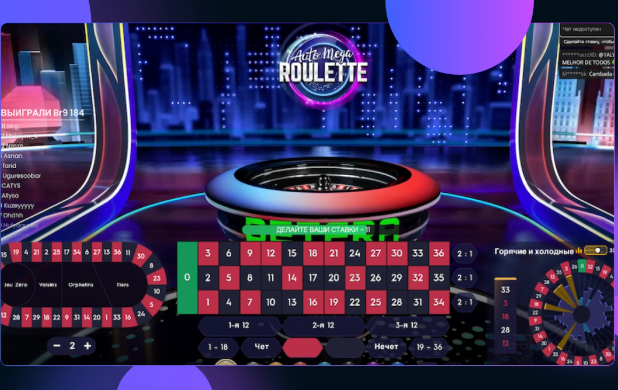
Another defining trait is the pull toward social interaction. For zoomers, games are about connection as much as bets and wins. They pick tournaments and formats where they can interact with other users: chats, shared streams, real-time reactions. A 2026 Gambling Insider review puts it plainly: Gen Z judges casinos by how much fun they are, not by payout size, and expects missions, achievements and progression, just like in regular video games. So social features on iGaming platforms have gone from a nice-to-have to the norm. One example is Betera, a platform that runs tournaments between players and keeps a full live-casino section where players talk to hosts, dealers and each other.
What share of the total audience is Gen Z
Gen Z players already hold a visible share of the market, and the 2025-2026 numbers back it up. Exact figures vary by GEO and platform, but the reference points look like this:
- A 2025 Turbomates Soft study put the Gen Z share at roughly 25% of the total iGaming audience.
- In May 2026, SweepsPulse analysts recorded a symbolic milestone: zoomers (ages 18-27) now account for about 22% of all money spent on gambling in the US, against 19% for Boomers. Gen Z spend grew 41% year over year, the average is $87 a month per player versus $72 for Boomers, and 68% of Gen Z activity happens on mobile.
- According to TransUnion data for Q2 2025, betting participation among US zoomers reached 34% (against a 30% average across all generations), with growth coming primarily through online sports betting.
The reasons are the same as a year ago: zoomers are getting older, starting to earn, and the entry barrier keeps dropping thanks to mobile apps. One more factor joined the list: sports betting is now legal in 39 US states, and a large part of this audience meets the industry for the first time through licensed apps rather than offshore sites.

Which bonus types Gen Z players prefer
Bonuses and rewards remain one of the most reliable acquisition and retention tools. The base classification hasn’t changed – 8 main types:
- Sign-up bonuses – a way to attract a new player, nudging them to create an account and accept the casino’s terms;
- Deposit bonuses – also aimed at new players, granted as a percentage of the deposit amount;
- No-deposit bonuses – let players test the platform without putting in their own money;
- Event bonuses – rewards tied to an occasion or holiday: Christmas, or the anniversary of signing up on the platform;
- Achievement and loyalty bonuses – a retention tool that rewards deposits, activity and completed achievements;
- Cashback – returns the player a share of what they spent or lost;
- Free spins – free slot spins, a chance to win without risking your own money;
- Multiplier bonuses – a slot mechanic that multiplies the player’s payouts.
As for preferences: a ZBD survey of 2,000 Gen Z respondents found that 70% of players expect to be rewarded for the time and money they spend on a platform, and 86% of them put cashback and achievement-and-loyalty bonuses first. That data is from 2024, nobody has convincingly overturned it, and the market keeps moving the same way: 2026 bonus trend reviews call cashback the format gradually displacing classic deposit bonuses, because players read it as honest insurance rather than a wager trap.
Welcome mechanics haven’t gone anywhere either. Back in 2022 the UK Gambling Commission noted that 41% of Gen Z respondents came into iGaming through welcome bonuses. For zoomers just reaching legal age, sign-up, deposit and no-deposit bonuses remain the first touchpoint with a platform.
Gen Z gaming preferences
For most zoomers gambling is a social outlet and a source of engaging experience, not just a way to earn. That’s what the whole niche of social casinos and sweepstakes platforms like Fliff grew on: community, personalization, playing “for coins” with no mandatory deposit. By 2024 the US sweepstakes casino sector had grown to $8.5-10.6 billion in revenue, with over 55 million Americans playing on such platforms – a heavily young audience. And this is where the main regulatory story of 2025-2026 played out: states started shutting the model down. California banned sweepstakes casinos from January 1, 2026, New York, New Jersey, Michigan, Connecticut and a dozen other states followed, and the Illinois regulator sent operators 65 cease-and-desist letters. The takeaway for the market: Gen Z demand for social formats is intact, but building a business on them now only works with a license and a legal team attached.
The second factor shaping Gen Z preferences is the short attention cycle. The market has worn the old Microsoft “8 seconds” reference to shreds, so here’s a fresher benchmark: research by Gloria Mark at the University of California, Irvine shows average uninterrupted focus on a single screen has dropped to about 47 seconds, from 2.5 minutes in the mid-2000s. Game mechanics adapted. Crash and instant games became the fastest-growing content category: more than 120 new crash titles shipped in 2025 alone, roughly a third of everything the genre has produced, with Spribe’s Aviator still the face of it. These games give a zoomer a fast result, an element of decision (cash out now or hold) and a shared chat – all three items from their wish list.
Which ad formats Gen Z prefers
This generation’s reliance on social media has only grown. EvoPlay once estimated that 54% of zoomers are influenced by social platforms; by 2026 the industry talks not about influence but about replacement: market reviews record that content creators and streamers have displaced traditional advertising as the main acquisition channel for Gen Z. TikTok, YouTube and Instagram have long worked as search engines for zoomers: that’s where they look for new games and events, not on Google. A few telling examples:
Live streaming. Twitch, Kick and YouTube Gaming let zoomers watch, learn and interact with their favorite streamers in real time. The path of Nix, a BetBoom partner, makes the case: he has been casting Dota 2 tournaments since 2021, was nominated for the Forbes.ru “New Media” award in 2023, became the most popular caster of The International 2024 according to Esports.ru, and in August 2026 pro player Noticed named him the best Dota 2 streamer in the Russian-speaking scene. Five years running, one person holds an audience that a betting brand converts into awareness.
Tournaments for streamers and content creators. BetBoom, an Alanbase client, started its Streamers Battle series in 2023 with 4 teams and a modest prize pool. By late 2025 the series had grown to 12 teams, prize pools of 4-5 million rubles and peaks above 100,000 concurrent viewers, and in November 2025 it went offline for the first time: the BetBoom Streamers Battle x Dinamo tournament ran at a Moscow arena with ticket sales. The format works because every participant streams the matches from their own point of view, and viewers flip between perspectives like between episodes of a show.
Influencer collaborations. Giveaways, contests and joint activations with streamers still deliver reach: 1Win’s “Dubai Adventure” with streamer Arthas collected around 20 million views in 7 months.
Humor and memes with influencers. This one produced the cautionary tale of the year. Memes with streamer Mellstroy’s face flooded social media in 2024, and creators baked betting brand logos and referral promo codes into the videos. Then in November 2025 Kazakhstan put Mellstroy on an international wanted list over a large-scale ad campaign for the Mellstroy.game online casino, run through those same challenges and giveaways where participants filmed videos mentioning the brand. The lesson cuts both ways: trash formats buy the cheapest viral reach to Gen Z and carry the highest regulatory and reputational risk on the market. Gen Z trends burn out fast, and adapting to them now requires checking the jurisdiction first.
Fiat vs crypto. Which deposit methods Gen Z prefers
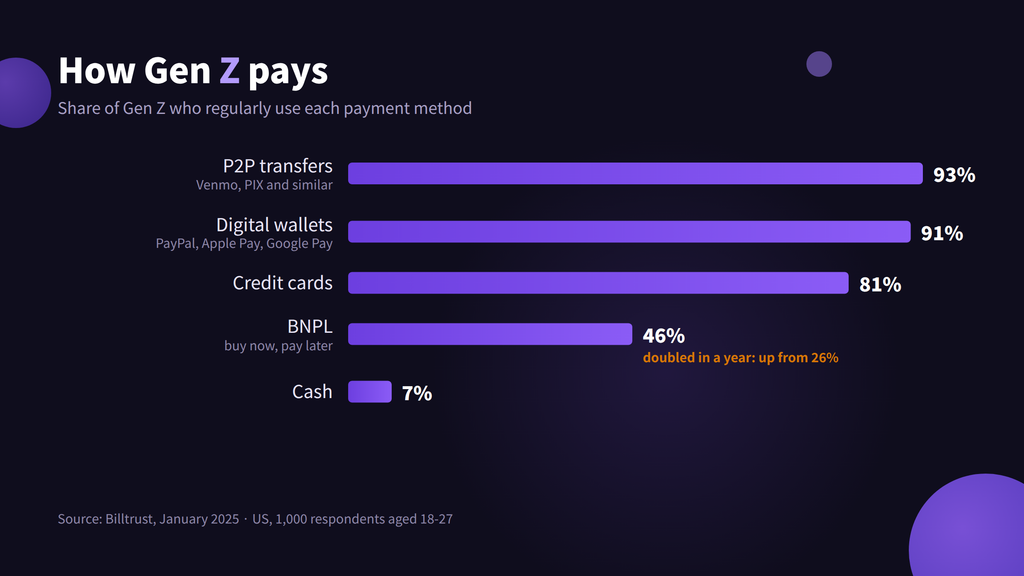
Gen Z’s tech fluency makes them omnivorous in payments, but the proportions have shifted over two years. A Billtrust study (January 2025, 1,000 US respondents aged 18-27) draws this picture:
- Digital wallets and mobile payments. 91% of zoomers use digital wallets, over 40% more than five times a month. PayPal, Google Pay and Apple Pay remain the base; in iGaming, Neteller, Skrill and PaySafe join the list;
- P2P payments (peer-to-peer). 93% of zoomers use services like Venmo or PIX – for this generation a transfer between people feels more natural than a bank payment;
- BNPL (Buy Now, Pay Later). Short-term installment financing among zoomers grew from 26% to 46% in a year – nearly double;
- Debit cards vs cash. Only 7% pay in cash, a historic low; digital methods overall account for 92% of preferences. The old “stay out of debt” stance is fading though: 81% of zoomers use credit cards, and only 47% pay the balance in full.
Crypto is in circulation with Gen Z too. A CFA Institute online study of 2,872 respondents across generations found a link between gambling and crypto investing: in the US, 61% of surveyed Gen Z crypto investors are tied to the gambling and betting industries. The crypto gambling sector overall is now valued at more than $65 billion, and stablecoins are named the trend of 2026: a deposit without volatility, at crypto speed.
The “fiat or crypto” question stays open for zoomers. Our team already broke down the strengths and weaknesses of both in the article “From processing to slots: how payment providers are taking over gambling”. The practical takeaway holds: before rolling out deposit methods for Gen Z players, analyze your own audience – the payment stack for Tier-1 Europe and for LATAM will differ more than any generation-wide averages.
Audience growth forecast and GGR
The number of Gen Z players keeps growing, and the market’s GGR grows with it. ResearchAndMarkets estimates in 2026 that the global online gambling market rose from $130.2 billion in 2025 to a projected $143.2 billion in 2026, heading for $212.4 billion by 2030 at a CAGR of about 10.4%. The forecast covers all demographics, but the drivers – mobile platforms, newly legalized markets and digital payments – are exactly where Gen Z concentrates.
2026 also delivered a sobering case. Rivalry, an operator that built its brand entirely around Gen Z and esports, grew revenue three quarters in a row (up 47% from the start of 2025), lifted average deposits per player by 24% in a quarter and cut expenses 58% year over year – then suspended operations in February 2026 and went looking for a buyer. The Gen Z audience grows faster than any other, but it’s also the most expensive to acquire and the most demanding of the product: marketing budgets burn out before LTV catches up. The operators who win are the ones tracking unit economics per traffic source, not just total handle.
Conclusions
Attracting and retaining Gen Z players is no longer a “someday” problem – zoomers already outspend Boomers on gambling and set which formats the market builds next: social mechanics, crash games, streamer marketing, instant payments. Their behavior demands constant readiness to change from developers, marketers and operators – and, as the Rivalry and sweepstakes stories show, cold-blooded math with one eye on the regulator. The winners will be those who combine fast reactions to trends with control over the economics at scale.
And for tracking and acquiring this kind of traffic you need a tool where the key functions live in one window: partners, offers, analytics and payouts. To see how Alanbase fits your case, book a demo call with a manager – we’ll walk through the platform on your tasks, and right after the call you get 14 days of free access.